Four men convicted in plea deal for June riot at Supreme Court justice's home
A Jerusalem court found four ultra-Orthodox men guilty of rioting and other offenses following a violent protest outside the residence of Justice Noam Sohlberg in June.
By Evelyn Hassan ·
The Jerusalem Magistrate’s Court convicted four ultra-Orthodox men on Tuesday for their involvement in a violent disturbance that took place outside the home of Supreme Court Justice Noam Sohlberg last June. The defendants, identified as Nachman Platnik, Avraham Fried, Gershon Hanun, and Shimon Tepp, reached a plea bargain regarding the charges. Under the agreement, all four men were found guilty of rioting, while Platnik and Fried were additionally convicted of trespassing with the intent to commit a crime.
The incident occurred on June 3 when more than 100 ultra-Orthodox men traveled to the West Bank settlement of Alon Shvut. They gathered to protest outside Sohlberg’s residence in response to his judicial rulings. These rulings ordered the government to implement economic sanctions against ultra-Orthodox men who dodge mandatory military service and to enforce draft orders that had previously gone unheeded.
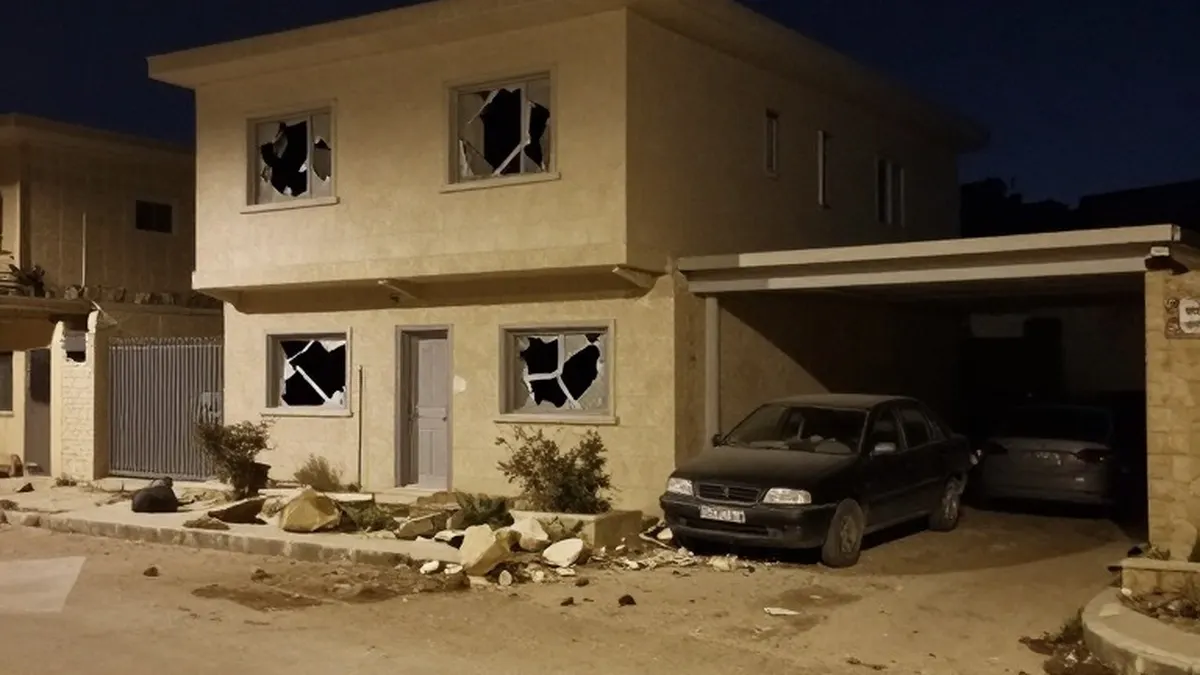
During the protest, the situation escalated into a riot. Windows in the justice’s home were smashed, and stones were thrown at the building. The rioters also damaged Sohlberg’s car and other property on the premises. Some participants in the disturbance attempted to break into the house. The indictment noted that prosecutors do not know who specifically led the attack.
The violence created a sense of urgency among residents in the area. According to the indictment, some of Sohlberg’s neighbors initially mistook the violent protest for a terror attack and took shelter in their safe rooms. One neighbor was physically assaulted during the event. Additionally, a police patrol car that arrived at the scene was forced to leave due to the threat posed by the mob.
Following the conviction, Ariel Iluz, an attorney with the Jerusalem District Attorney’s Office, commented on the case. He stated that law enforcement authorities view any attempt to exert pressure on a Supreme Court justice through violent rioting near his home with the utmost gravity. The maximum sentence for both the charges of rioting and trespassing with intent to commit a crime is two years in prison.
In the immediate aftermath of the riot, police arrested 65 suspects who had boarded a bus to flee the scene. Of these, 62 were brought to court for remand hearings. This event highlights a recurring pattern of rowdy protests by extremist Haredi groups against efforts to penalize the failure to perform mandatory military service.
The protest at Sohlberg’s home, which was reported to have an intent to harm him, sparked warnings that the assault constituted an attack on the judiciary and on democracy. It also raised fears for the safety of other judicial officials. The High Court of Justice has repeatedly pressed the government to enforce Haredi enlistment following its 2024 ruling that there was no legal basis for blanket exemptions from the draft for yeshiva students.
The Israel Defense Forces has also repeatedly warned of an urgent manpower shortage amid the regional war that began with the Hamas-led onslaught of October 7, 2023. The issue of draft exemptions was a key topic in the recent election. Opposition parties vowed to pass legislation to draft the Haredim, while ultra-Orthodox parties threatened not to rejoin the coalition unless a law was passed to preserve the exemptions.
Ultimately, the election results were inconclusive. Neither the bloc led by Prime Minister Benjamin Netanyahu nor an opposition bloc seeking to oust him had a decisive path to a majority in the Knesset. The conviction of the four men marks a significant legal step in addressing the tensions surrounding military service and judicial authority.