BepiColombo Secures Mercury Orbit After Solving Software Glitch
The joint ESA and JAXA spacecraft successfully entered Mercury's orbit on November 21, overcoming a mid-maneuver software error that triggered a brief safe mode.
By Evelyn Hassan ·
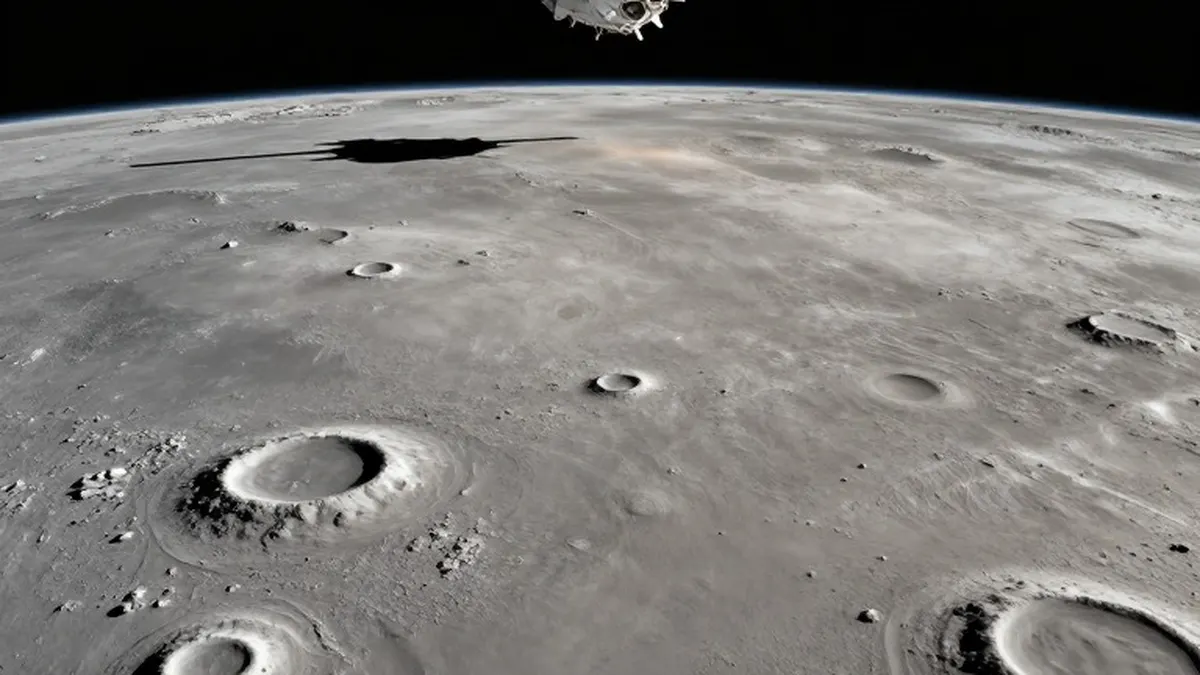
The BepiColombo spacecraft has officially entered orbit around Mercury, completing a complex eight-year journey from Earth. Launched in October 2018 as a collaborative effort between the European Space Agency and the Japan Aerospace Exploration Agency, the mission has finally reached its primary destination to begin scientific observations of the innermost planet.
The critical orbital insertion maneuver took place on November 21. Mission control at the European Space Operations Center in Darmstadt, Germany, anticipated a brief loss of communication as the spacecraft passed over the planet. During this window, BepiColombo was scheduled to fire four axial thrusters to slow down sufficiently and lock into orbit. The burn was designed to last approximately 37 minutes, bringing the craft within 400 miles of Mercury's surface.
However, when contact was reestablished, the operations team discovered an unexpected interruption. The maneuver had been cut short, causing the spacecraft to automatically enter safe mode, a state where nonessential activities are suspended to preserve system integrity. Initial analysis of trajectory data indicated that BepiColombo had completed only about 77% of the required burn sequence.
ESA BepiColombo flight operations director Ignacio Tanco described the immediate reaction to the anomaly. He stated that upon finding the spacecraft in safe mode, it was like flipping a switch, and everyone was focused on understanding what had happened. The agency has since traced the issue to a software problem involving attitude guidance and thruster control, though the investigation into the specific error remains ongoing.
Despite the incomplete burn, scientists confirmed that the spacecraft had successfully locked onto Mercury's orbit. It took six hours from the start of the maneuver to verify the success of the operation. The team worked to ensure the craft remained stable while assessing the impact of the glitch on the overall mission timeline.
In the coming weeks, BepiColombo will perform a series of smaller thruster burns to fine-tune its trajectory. The flight dynamics team will adapt each movement based on the spacecraft's actual path to reach the optimum point in orbit. The ESA described this process as similar to braking a car at the precise moment to find the sweet spot. These multiple, smaller maneuvers are also designed to maximize the efficiency of the spacecraft's fuel supplies.
The next major milestone is scheduled for December 9, when the spacecraft will release two dedicated science orbiters. The first is the ESA's Mercury Planetary Orbiter, or MPO. This module will spend several months navigating to its designated position. It is expected to enter its final operational orbit in March 2027, with science operations commencing in April of that year.
The primary focus of the MPO will be studying Mercury's interior, surface, and the surrounding space environment, according to Geraint Jones, the ESA's lead project scientist for BepiColombo. The mission aims to gather comprehensive data that will enhance understanding of the planet's geological and physical characteristics.
The second orbiter is the Mercury Magnetospheric Orbiter, known as Mio, operated by the Japan Aerospace Exploration Agency. Mio will conduct studies focused on Mercury's magnetosphere, interplanetary dust, and electric fields. Together, the two orbiters will provide a detailed picture of the planet and its immediate space environment.
This successful orbital insertion marks a significant achievement for international space cooperation. After overcoming technical challenges during its long transit, the BepiColombo mission is now poised to deliver new insights into one of the most difficult planets in the solar system to explore.
More News · National news · Report a business · Got a Story?