Danish Supreme Court Validates Ghetto Law Allowing Evictions Based on Non Western Origin
The high court ruled that limiting non Western residents in designated housing areas does not constitute ethnic discrimination, a decision that has drawn mixed reactions from legal experts and policymakers.
By Evelyn Hassan ·
Denmark's Supreme Court upheld a controversial law on Monday that aims to eliminate ethnic enclaves in public housing. The legislation grants authorities the power to limit the number of non Western immigrants and their descendants residing in specific housing developments. This ruling marks a significant victory for the government's strategy to force assimilation and prevent the formation of what officials term parallel societies.
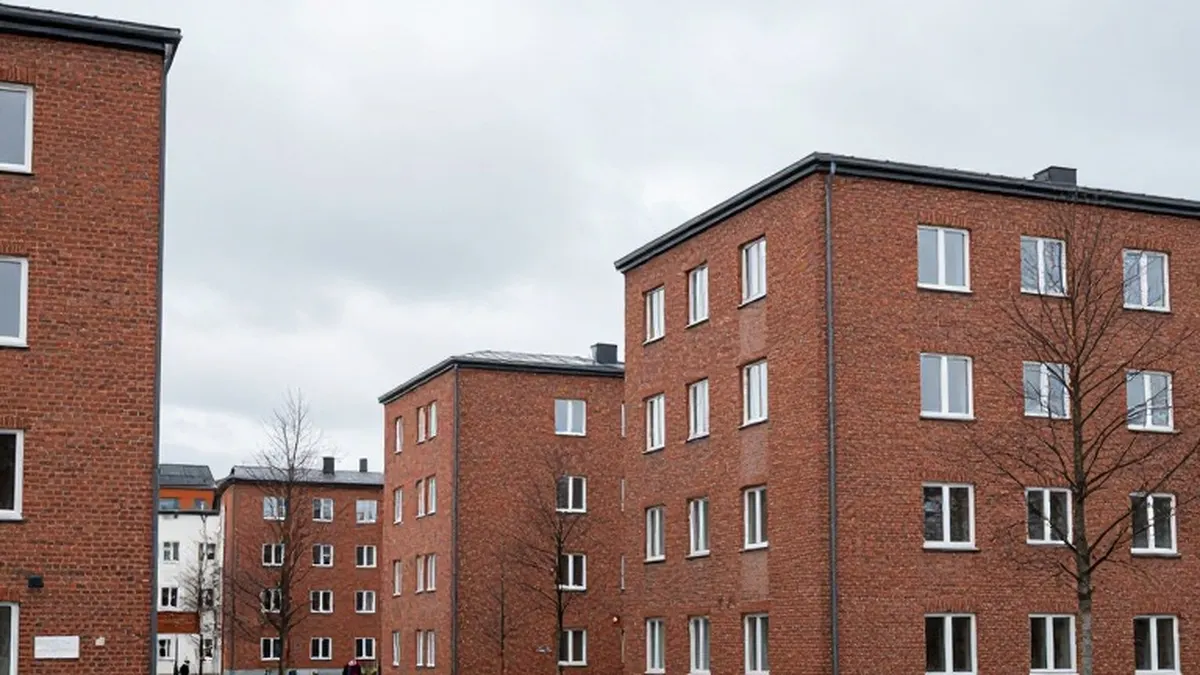
The court's decision centered on the 2022 eviction of residents from the Nojsomhed Sydvej housing development in Helsingør, a city located north of Copenhagen. The judges determined that the eviction did not amount to ethnic discrimination. This legal framework was introduced in 2018 and is considered one of Europe's most aggressive attempts to manage integration, attracting both praise and criticism from international politicians.
Under the law, residential areas with at least 1,000 inhabitants are subject to redevelopment if more than half of the residents are immigrants or descendants from non Western countries. These areas must also meet specific socioeconomic criteria regarding employment, income, education, and crime. Designated transformation areas are required to reduce the share of public family housing to no more than 40% by 2030. This process often involves demolishing buildings, selling properties to private landlords, or converting units, which frequently results in the relocation of current residents.
The definition of non Western countries includes all nations outside the European Union, as well as Andorra, Iceland, Liechtenstein, Monaco, Norway, San Marino, Switzerland, the United Kingdom, Vatican State, the U.S., Canada, Australia, and New Zealand. The classification relies on a person's country of origin rather than their citizenship. Consequently, even Danish citizens born and raised in the country may be classified as non Western if both of their parents immigrated from a non Western nation.
The seven families evicted from Nojsomhed Sydvej argued that the distinction between Western and non Western origins was effectively a proxy for ethnicity, making it illegal racial discrimination. The Supreme Court rejected this argument, concluding that the distinction was based on nationality and country of birth. The court noted that both categories encompass a wide range of ethnic groups and that individuals of the same ethnicity could fall into either category. This ruling followed a decision last December by the European Union's highest court, which suggested the law could be discriminatory but left the final determination to Danish courts.
Anders Svendsen, Chief Legal Officer for Denmark's national tenants' organization LLO, said the group was slightly surprised by the outcome given the previous EU court ruling. The organization estimates that several thousand homes have already been demolished under the legislation. Svendsen noted that while the regulation is popular among the general population, it has been quite unpopular among public sector renters who fear being next. He argued that the government views public housing as a problem to be solved, with less housing seen as the cure.
Joachim B. Olsen, a former Danish lawmaker and opinion editor for the Danish newspaper B.T., was not surprised by the decision. He stated that legislation is thoroughly vetted by the Department of Justice to ensure it aligns with the constitution and international obligations. Olsen rejected the idea that the law is a proxy for race, arguing it is based on cultural background. He pointed out that the provisions apply to anyone living in designated areas regardless of ethnicity or citizenship.
Olsen argued that the policy has been broadly successful. According to government figures, the number of neighborhoods officially classified as ghettos dropped from 29 in 2018 to five in 2025. He noted that incomes, employment, and educational levels in these areas have risen. Overall, he stated that the positives of the policy outnumber the negatives.
Denmark has become a model for other European governments seeking to tighten immigration restrictions. While right wing populist parties often drive demands for tougher policies, Denmark's approach is championed by the center left Social Democratic Party led by Prime Minister Mette Frederiksen. She has expressed a desire to preserve Danish culture and maintain a strong majority culture, stating that Denmark is an ethnically Danish indigenous tribe that evolves as new people arrive.
The influence of Danish policy has been felt across the continent. Britain's government cited Denmark's success earlier this year when it changed its own rules on asylum. Home Secretary Shabana Mahmood said the reset in Britain's asylum offer was inspired by Denmark. Additionally, Denmark has moved to establish return hubs, or deportation centers, outside of Europe. Last week, the country joined Germany, Austria, Greece, and the Netherlands in announcing plans for a hub in Rwanda for migrants who have exhausted legal avenues to remain in Europe but cannot be returned to their countries of origin.
More News · National news · Report a business · Got a Story?