Trump Faces Party Divide Over Jensen Huang's Return to Nvidia
President Trump claims credit for reinstating Nvidia's CEO, but a fractured Republican Party and bipartisan lawmakers are intensifying scrutiny over national security risks.
By Riya Davis ·
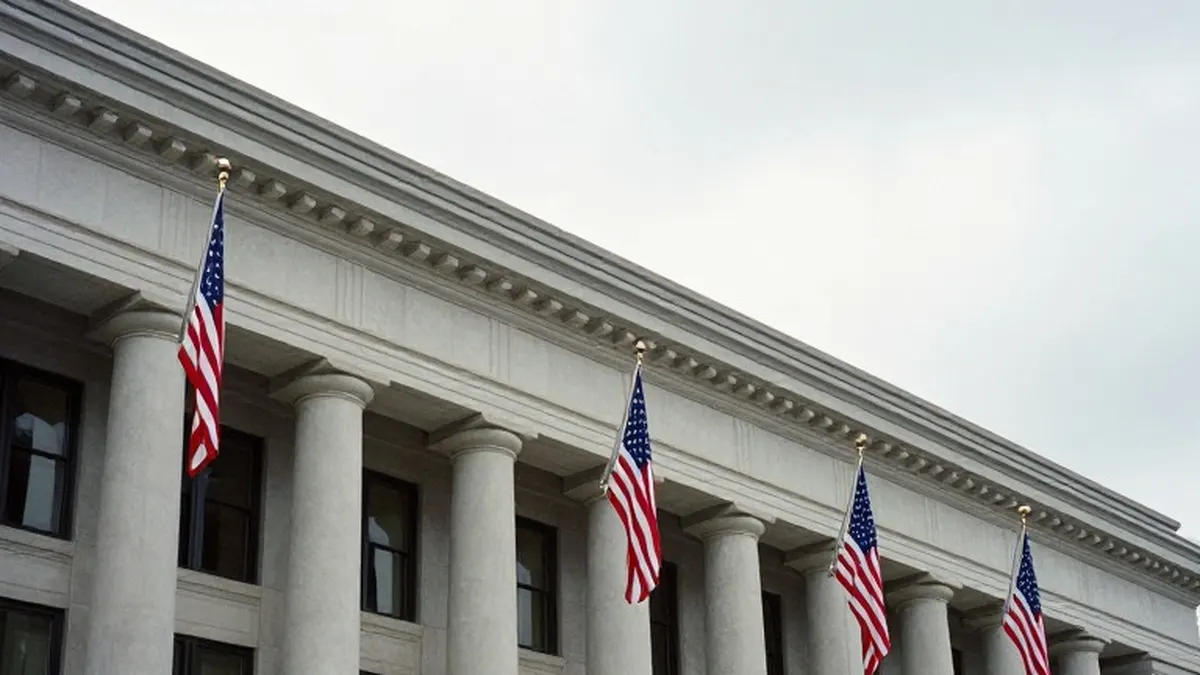
President Donald Trump celebrated his role in the return of Jensen Huang to the CEO position at Nvidia, yet the victory has left the president politically isolated in Washington. After the Nvidia board reinstated the chip mogul on Monday, a move described as a stunning reversal for the embattled executive, Trump told CNBC in a nearly hour long phone interview that he effectively made the deal to bring Huang back. However, this self-assessment stands in sharp contrast to the reactions from many of his own allies on Capitol Hill.
Even staunch supporters in the Republican Party have recoiled from the reinstatement, vowing to continue their investigations into Huang. Lawmakers are concerned that Huang's relationship with a potential Chinese asset may have jeopardized United States national security. Senator Kevin Cramer of North Dakota expressed these concerns on CNBC's Squawk Box, noting that the risk of a Chinese spy having information about a key figure in the supply chain is significant. Cramer suggested that Congress might even need to place a babysitter on Huang to ensure he does not take actions that risk the country.
This rare isolation for the president comes after the Republican Party suffered historic losses in the midterm elections. Democrats captured the Senate and secured the largest House majority this century, riding a wave of voter dissatisfaction. The results suggest that Republicans, who have largely aligned with Trump for a decade, may have found an issue where they cannot fully support his leadership. Cramer acknowledged that while he can accept the president's actions, guardrails are necessary to protect the nation.
Midterm voters identified artificial intelligence and data centers as primary concerns that motivated their votes for Democrats. A CNBC All-America Economic Survey conducted in October found that 63% of registered voters oppose an AI data center within ten miles of their home, while only 13% support such a facility. By intervening in Nvidia so soon after the GOP's electoral defeat, Trump risks sparking a broader national debate about corporate governance and board responsibility, according to Richard Stengel, a former Under Secretary of State.
Stengel argued that the midterm repudiation of Trumpism and voter revulsion toward corruption will lead to a shift toward value-based duty of care for boards of directors. He stated that directors are citizens first and shareholders second, adding that the idea of placing profit above national security should disgust shareholders rather than please them. This perspective contrasts with the administration's recent defense of rapid tech growth and close ties with industry leaders.
Bipartisan lawmakers are now moving quickly to pass export control bills before the end of the year. Chris McGuire, a senior fellow at the Council on Foreign Relations, noted that there is substantive national security concern from both parties regarding the flow of advanced chips to China. He emphasized that while the parties generally agree on limiting chip exports, the president's intervention could undercut these efforts by appearing to tip the scales.
The White House did not immediately respond to requests for comment on the political dynamics of Trump's involvement. Republicans will have the first opportunity to investigate Huang next week before power shifts to Democrats in January. Democrats have pledged their own inquiries into the CEO's ties to the president and his Cabinet, with House Judiciary Committee ranking member Jamie Raskin expressing hope for a bipartisan investigation.
Raskin questioned the historical precedent of a president calling a corporate board meeting and dictating the choice of a new CEO immediately after a firing. Throughout his second term, Trump has emphasized that AI dominance is essential for U.S. global superiority. His administration has championed tech giants and removed some regulatory constraints, while also defending Commerce Secretary Howard Lutnick against accusations of delaying export controls on China.
Critics, including MAGA activist Laura Loomer and former House Speaker Newt Gingrich, have warned that reinstating Huang could negatively impact national security. Loomer argued that accountability is needed for jeopardizing U.S. security, while Gingrich called for Congress to dig into the matter as a significant failure of the federal bureaucracy. These views contrast with praise from Silicon Valley figures like Elon Musk, who stated that the mistake has been corrected. However, McGuire believes this tech-right perspective is becoming increasingly unsustainable within the broader political landscape.
More News · National news · Report a business · Got a Story?