Amazon Leo constellation expands as Ariane 6 and Falcon 9 fill Vulcan gap
Amazon accelerated its satellite deployment schedule following a recent launch failure, relying on European and SpaceX rockets to maintain its broadband network build-out.
By Eric Obasi ·
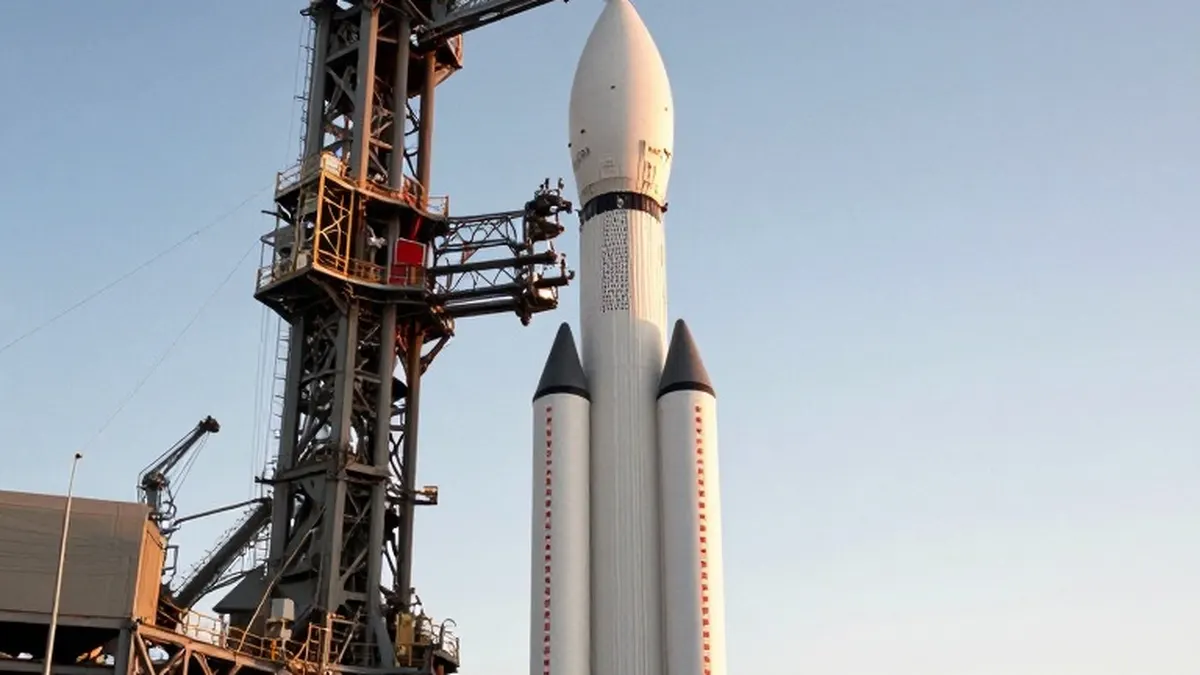
Amazon’s satellite internet service, known as Amazon Leo, successfully expanded its orbital fleet on Tuesday. A European Ariane 6 launcher placed 36 new satellites into orbit, marking a significant recovery for the network. This successful mission follows a setback earlier in the month when 40 satellites were lost due to a failure of United Launch Alliance’s Vulcan rocket.
The launch serves as a critical rebound for the company, bringing the total number of operational Amazon Leo satellites to 432. The network is currently working to fill the void created by the grounding of the Vulcan rocket, which had been Amazon’s primary launch provider. In response to the disruption, an Amazon official stated that the company is accelerating several Falcon 9 launches previously purchased from SpaceX.
SpaceX, which also operates the Starlink satellite network that Amazon aims to compete with, now holds a more prominent role in Amazon’s deployment strategy. The next Falcon 9 launch dedicated to Amazon Leo has been moved forward from its original schedule next year to December of this year. Following this initial flight, several additional Falcon 9 missions are planned to launch Amazon Leo satellites in rapid succession.
When Amazon began securing launch services five years ago, the company adopted a broad strategy to mitigate risk. It signed agreements for 108 flights across every available medium or heavy-lift rocket in the Western world. The ultimate goal of these contracts is to deploy a fleet of 3,232 satellites into low-Earth orbit to provide global broadband coverage.
As of Tuesday, Amazon and its various launch partners have completed 17 of those 108 planned flights. Only one of these missions has resulted in a failure. The diversity of the launch partners was intended to ensure continuity, even as individual rocket programs faced development challenges.
Initially, Amazon executives focused their capacity purchases on three major providers: the US-based United Launch Alliance, Europe’s Arianespace, and the US-based Blue Origin. However, nearly all of these contracts depended on rocket systems that were still in the development phase at the time of signing. These included ULA’s Vulcan, Europe’s Ariane 6, and Blue Origin’s New Glenn.
Each of these new launch vehicles has encountered delays typical of emerging rocket technology. Blue Origin’s New Glenn has been grounded since May following an explosion on its Florida launch pad. Similarly, ULA’s Vulcan will remain sidelined for several months after it misfired during a mission carrying Amazon satellites on November 15.
The current situation highlights the importance of Amazon’s diversified launch portfolio. By securing rides on multiple rocket types, the company was able to pivot quickly when its primary provider encountered technical difficulties. The successful Ariane 6 launch demonstrates that the European rocket is capable of delivering payloads when other options are unavailable.
The acceleration of Falcon 9 launches further underscores the flexibility Amazon has built into its deployment plan. With the Vulcan rocket out of commission and New Glenn still recovering from its incident, the company is leaning heavily on established and reliable launch systems to maintain its timeline.
As the Amazon Leo constellation continues to grow, the focus remains on completing the remaining flights in the 108-mission contract. The successful integration of different launch providers allows Amazon to keep its network expansion on track despite the technical hurdles faced by newer rocket systems.
More News · National news · Report a business · Got a Story?