Elbit Systems Secures Contract for German Navy F128 Frigates
The German subsidiary of Elbit Systems will supply electronic warfare systems for new naval vessels, part of a broader expansion in Israeli-German defense cooperation.
By Riya Davis ·
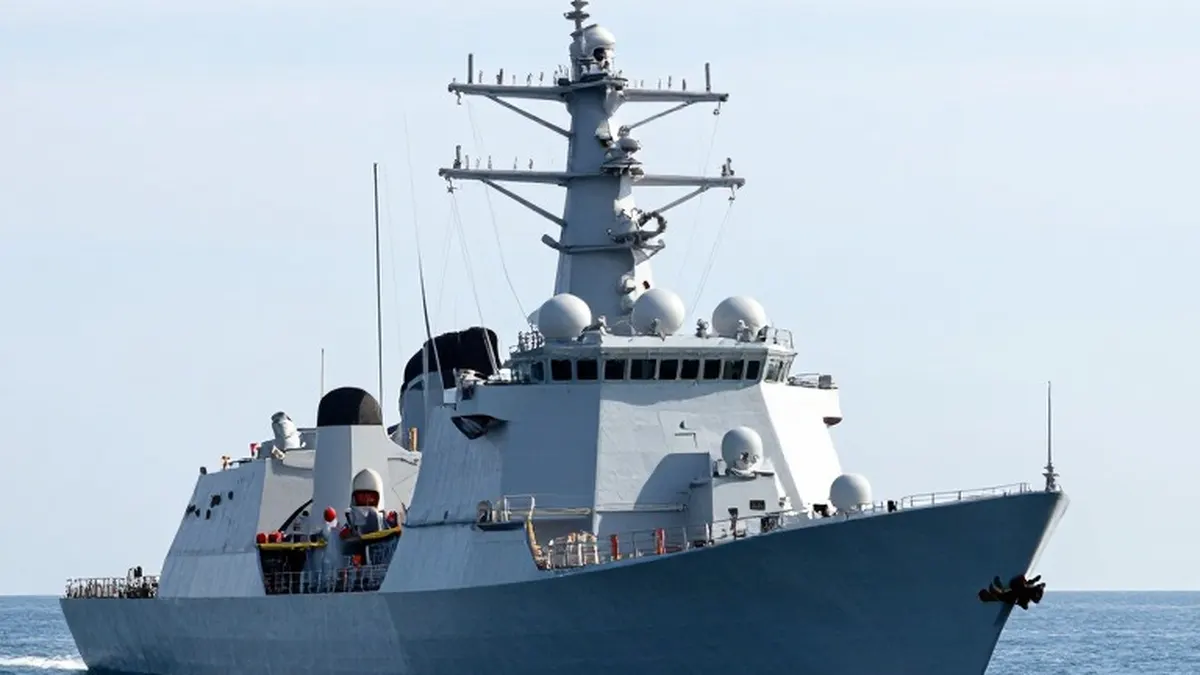
Elbit Systems has secured a significant contract through its German subsidiary to provide electronic warfare equipment for the German Navy. The company will supply systems for four of the new F128 frigates, marking a substantial addition to its portfolio of naval defense projects in Europe.
The agreement was reached with Thyssenkrupp Marine Systems, the primary shipbuilder for the vessel class. The contract spans a five-year period and is estimated to be worth several tens of millions of dollars. This deal reinforces Elbit's position in the NATO defense market following recent wins in other member states.
The electronic warfare systems are designed to integrate both passive and active capabilities. These systems allow for the detection, identification, and analysis of potential threats. Additionally, they provide electronic self-defense and attack capabilities, enabling the frigates to disrupt enemy electronic systems and counter incoming missile threats.
The technology can also identify hostile vessels by analyzing their radar emissions and communications signals. This functionality is critical for the F128 class, which is specifically designed for anti-submarine warfare. The design addresses growing security concerns regarding Russian submarine activity in European waters.
Germany has committed to procuring eight of these frigates in a deal valued at 11.6 billion euros. This represents the largest order for surface vessels in the history of Thyssenkrupp Marine Systems. The ships, which have a displacement of approximately 4,000 tons, are intended for operations in the Baltic Sea, North Sea, Atlantic Ocean, and the High North.
The delivery schedule requires Thyssenkrupp Marine Systems to hand over the first frigate by December 2029. Subsequent deliveries are planned to continue through 2032. In a parallel development, Swedish manufacturer Saab secured a separate contract worth approximately 788 million euros to supply combat systems, sensors, and composite structures for four of the same vessels.
This latest contract is part of a broader trend of Elbit Systems expanding its naval electronic warfare presence across NATO. In 2021, the company's British subsidiary won a contract with Babcock to supply advanced electronic warfare capabilities to the Royal Navy. More recently, in March 2025, Elbit and Rafael Advanced Defense Systems jointly secured a contract for naval decoy systems for five frigates operated by an undisclosed European NATO member state.
Beyond Elbit, the German Navy has increasingly turned to Israeli defense manufacturers for various systems. Israel Aerospace Industries and Hensoldt secured a 200 million euro contract to supply new radar systems for existing naval vessels. In February 2026, IAI delivered an unmanned underwater vehicle to the German Navy, a deal valued at several tens of millions of euros.
The autonomous underwater vehicle is capable of traveling at seven knots and operating continuously for two to three weeks. Additionally, in September 2026, the German Navy conducted its first test launch of two Long-Range Artillery ballistic missiles developed by IAI in the North Atlantic Ocean. The successful test marked a step toward a potential procurement agreement that could provide Germany with long-range precision-strike capabilities.
The missiles have a reported range of approximately 400 to 430 kilometers, though the German Navy has indicated a range exceeding 500 kilometers. With an accuracy of approximately 10 meters, the system is viewed as a crucial addition to the navy's arsenal. Following the successful test, officials announced plans to advance procurement, with German media reporting that the potential agreement could be worth hundreds of millions of dollars.