Autonomous weapons risk turning human operators into scapegoats, says Israeli expert
Dr. Aviv Bar Zohar argues that legal frameworks must evolve to ensure meaningful human control over autonomous systems, preventing operators from bearing unfair blame for complex technological failures.
By Riya Davis ·
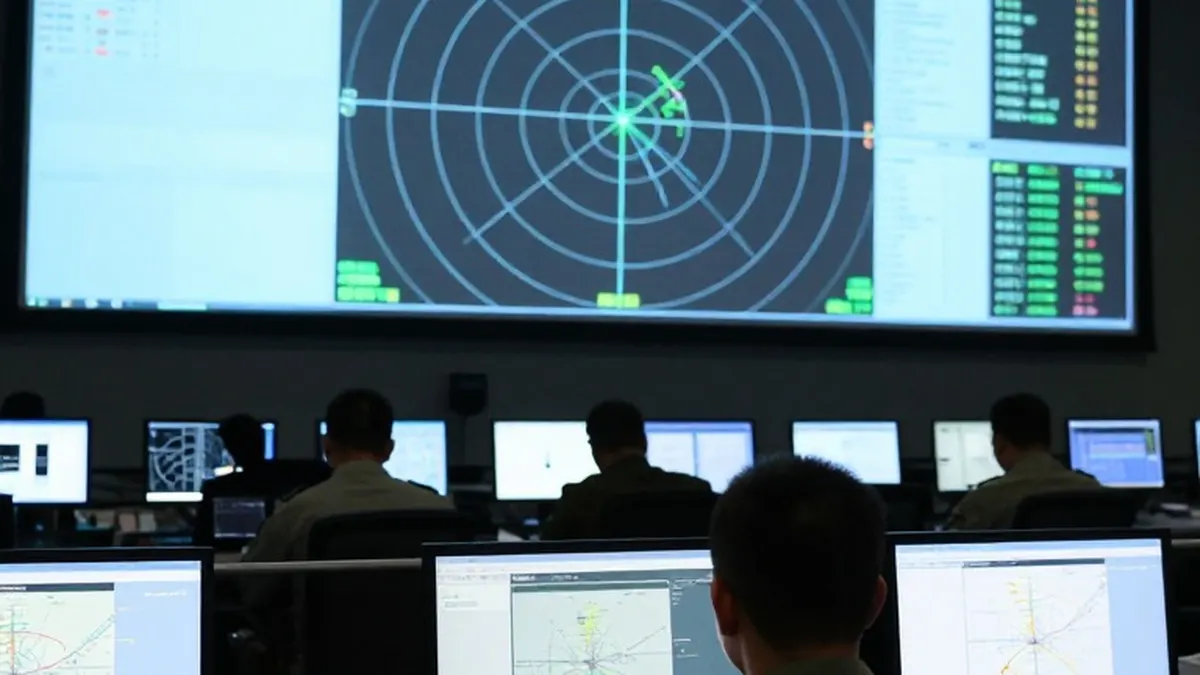
A significant challenge in modern warfare is ensuring that human operators retain meaningful control over autonomous systems. Dr. Aviv Bar Zohar, an expert in autonomous systems and airspace defense, highlights the difficulty of maintaining human judgment when the volume of threats exceeds human processing capacity. He notes that while an operator might handle a single incoming threat within 30 seconds, managing 100 threats in the same timeframe often strips away the ability to exercise independent judgment.
Bar Zohar, a reserve colonel in the Israel Air Force, emphasizes the need to protect the soldier at the end of the chain of command. His concern extends beyond the capabilities of the machine to the expectations placed on the personnel using it. He warns that young officers may be trained to operate sophisticated systems without fully understanding their technological limitations. Consequently, if a system fails, the operator closest to the final action may become the primary candidate for blame, even though critical decisions were made much earlier by designers and commanders.
He presented these findings at the 14th edition of UVID DroneTech 2026, held on November 12 at Expo Tel Aviv. The event was the largest in its history, attracting more than 6,000 attendees and over 100 exhibiting companies. Participants included defense officials, industry executives, and international representatives who discussed topics ranging from lessons of the war with Iran to artificial intelligence and drone defenses.
Bar Zohar’s doctoral research at Reichman University, supervised by Prof. Aviv Gaon, led to the development of the LEGIT model. This framework aims to keep legal responsibility connected to all individuals involved in the lifecycle of autonomous weapons, including developers, approvers, commanders, and operators. The model seeks to transform broad legal concerns into practical requirements for lawful use.
The first element of the LEGIT model is legal review, which involves examining weapons during development and defining the conditions for their lawful use. Bar Zohar stresses that approving a weapon does not constitute blanket approval for every subsequent attack. The second element, explainability and evidence, requires that a system’s actions can be reconstructed after an incident. He argues that investigators must be able to trace the sequence of events back to the last human decision, rather than accepting that a robot made an unexplained choice.
Governance and guidance form the third component, addressing authority, restrictions, and oversight. Bar Zohar describes the risk of operators becoming a moral crumple zone, a term borrowed from anthropologist Madeleine Clare Elish. This occurs when a person absorbs responsibility for a complex system failure despite having limited control over its behavior. The model further mandates meaningful human involvement at key stages, such as designing the system and defining its rules of use.
The final element focuses on training and technology assessment. Bar Zohar uses the analogy of a driver with adaptive cruise control who has never been taught how to use it. For weapons, he argues that system limitations must be translated into clear operational safeguards. For instance, if a system performs poorly in fog, the interface should require the operator to address that condition before proceeding.
Existing international law already imposes limits on attacks, requiring targets to be military and proportionate to the expected harm. Article 36 of the 1977 Additional Protocol I to the Geneva Conventions requires states to assess new weapons, though Israel is not a party to this protocol. Nevertheless, Israel has publicly described conducting weapons reviews and affirmed that responsibility remains human across a weapon’s life cycle.
Bar Zohar acknowledges that implementing these standards takes time and money. His ambition is for the LEGIT model to become soft law, influencing practice without constituting a binding treaty. While the framework does not settle which autonomous weapons are permitted, it focuses on making human responsibility workable before deployment, ensuring that operators have the understanding, time, and authority needed for their roles to be meaningful.