Southern Lebanon: Villagers return to homes destroyed by Israeli withdrawal
Atef Kadouh and his family found their house fire-damaged and rigged with explosives after Israeli troops left Zawtar al-Gharbiyeh under a U.S.-brokered plan.
By Evelyn Hassan ·
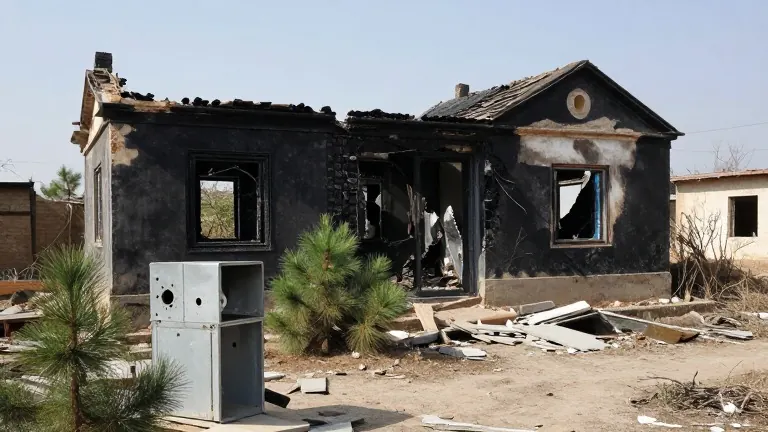
Atef Kadouh returned to his home in Zawtar al-Gharbiyeh, Lebanon, in July to find the structure occupied by soldiers and then set ablaze. The village became the first test site for a U.S.-brokered plan requiring Israeli forces to pull back and the Lebanese army to assume control. For residents like Kadouh, the return meant facing immediate destruction without utilities or state support.
The Israeli military has destroyed more than 20,000 homes in a self-declared security zone along the Lebanese border, according to the country's defense minister. Lebanon's Health Ministry reports that Israel has killed more than 135 first responders and medical staff in the past two years. The Kadouh family lost one of those medics, Adel Kadouh, in a March 28 drone strike.
Adel Kadouh, 27, was a sports teacher and basketball champion who volunteered as an ambulance driver when the war began. He was killed alongside four other medics while burying a 75-year-old man who died in a hospital. The Israeli military stated that militants routinely pose as paramedics to transport weapons. It did not respond to follow-up questions noting the group was killed at a burial site rather than in an ambulance.
Kadouh described the physical damage to the home in specific terms. Appliances including the fridge, freezer, and washing machine had bullet holes. Furniture was pushed from the second-floor balcony to the ground below. In the kitchen, floor tiles were shattered and cupboards wrenched from the walls. Blackened food packets and rotting sandwiches lay on the floor, indicating a fire set during the soldiers' departure.
The family found a work roster written in Hebrew on a hallway wall near scorched surfaces. The list contained the first names of Israeli soldiers. A spent missile or drone engine casing with English markings reading "propulsion unit tactical" was found in one room. The house lacks running water and electricity because the military destroyed the solar panels.
The Lebanese army told the family that many houses in the village were rigged to be blown up. Army units dismantled explosives left in the Kadouh home and others. Israeli military policy bars burning homes or leaving explosives, but the army did not reply to queries explaining the specific damage to this property. Kadouh saw a tank in his courtyard via drone images posted on social media while he was barred from entering the village.
The destruction extended to the family's land. The Israeli army used a bulldozer to uproot pine trees that produced a key cash crop of pine nuts. The military also demolished the family garage and destroyed their tractor. Yaghi, Kadouh's wife, pointed to the locations where olive trees, avocado trees, and a fig tree brought from Italy once stood. She noted that fruit-bearing cactus and thyme fields were also lost.
The couple raised five children in the home, but only four remain. Kadouh said the state failed to check on residents after their homes were destroyed. He criticized political parties and allied factions for urging villagers to return without providing essentials. He noted that the Lebanese army is deliberately underequipped to avoid presenting a threat to Israel, leaving a security vacuum that allowed armed groups to enter the area decades ago.
Kadouh expressed a desire for peace but doubted it would happen in his lifetime under Israeli Prime Minister Benjamin Netanyahu. He stated that Netanyahu killed his son and should be the one to bring him back. Kadouh said he would rather sit in the dirt of his native land than live elsewhere, even as smoke rose from nearby villages still under attack.