Colombia grapples with renewed conflict on the tenth anniversary of the 2016 peace accord
A decade after the historic FARC peace deal, Colombia faces rising violence and political shifts that threaten to undo the progress of the agreement.
By Riya Davis ·
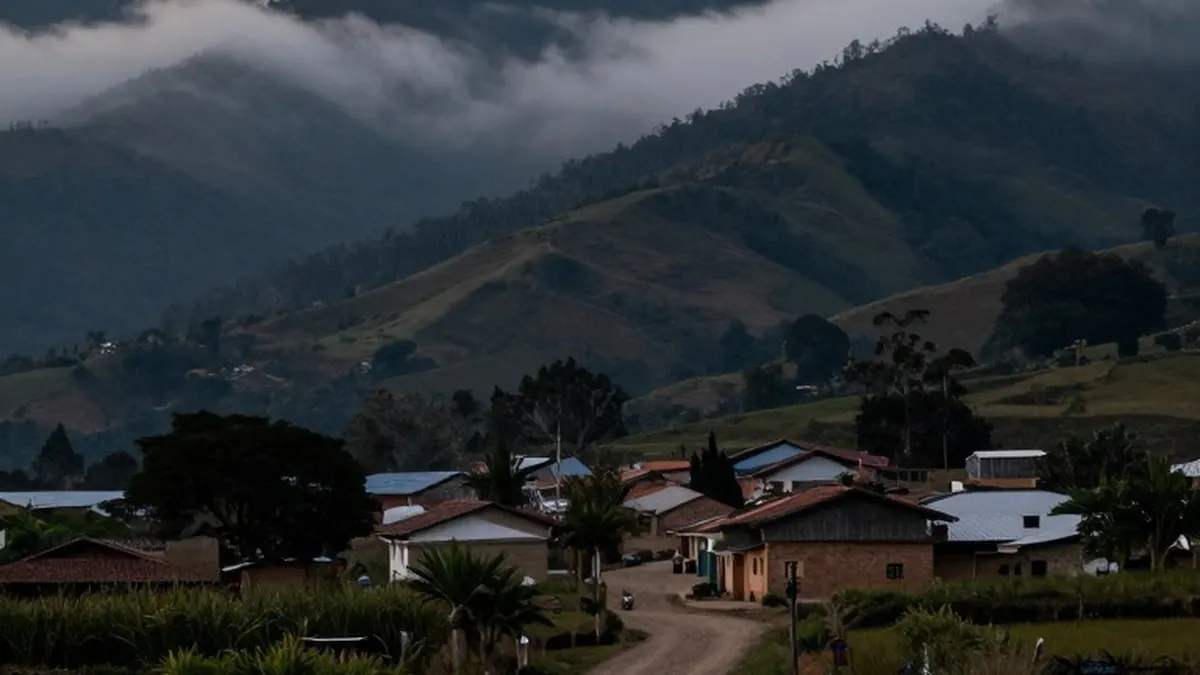
Ten years have passed since the Revolutionary Armed Forces of Colombia, or FARC, signed a historic peace treaty with the Colombian government. On November 24, 2016, more than 13,000 fighters, including Jorge Suarez, agreed to lay down their arms. Suarez, who was born in a rebel camp and began fighting at age 15, described the moment as a historic event he had never imagined would occur. The deal concluded over four years of negotiations and earned President Juan Manuel Santos the Nobel Peace Prize.
The agreement was intended to end a six-decade internal armed conflict that claimed more than 450,000 lives between 1985 and 2018. According to Colombia's Truth Commission, approximately 80 percent of those victims were civilians. The commission also found that state-backed paramilitary groups and government security forces committed many of the most severe human rights abuses. Initially, the treaty brought a significant reduction in violence and opened former rebel territories to tourism and trade.
However, the disappearance of the FARC did not resolve Colombia's broader security challenges. Various criminal organizations, including former paramilitaries, FARC dissidents, and the National Liberation Army, have expanded their control over land and illicit economies. Government data indicates that the ranks of these armed groups nearly doubled, rising from 15,000 members in 2022 to 28,000 today. Child recruitment has increased, and drone warfare poses a growing threat to civilian populations.
Javier Florez, director of conflict and security at the Ideas for Peace Foundation, noted that initial enthusiasm for the deal was somewhat naive. The 2016 accord contained over 300 pages of provisions aimed at addressing root causes of the conflict, such as land restitution and the substitution of coca crops. It also outlined pathways for ex-combatants to transition to civilian life through amnesty and transitional justice mechanisms. Yet, a decade later, about 43 percent of these stipulations remain largely unimplemented, according to the Kroc Institute for International Peace Studies.
Political shifts have further complicated the situation. After President Ivan Duque took office in 2018, state support for the accord weakened, with his administration neglecting key areas like land restitution. His successor, Gustavo Petro, promised full implementation of the deal and launched a Total Peace strategy to expand negotiations. However, critics argue that these efforts fell short, allowing criminal groups to regroup and resupply.
Current President Abelardo de la Espriella, elected in June, has taken a harder line. He pledged to restore security through military force rather than talks. In a recent social media post marking the anniversary, he called the agreement insufficient and costly, describing it as a false peace. He has suggested dismantling the Special Jurisdiction for Peace and the Office of the High Commissioner for Peace, while ramping up military offensives against armed groups.
Humberto de la Calle, who led the government's negotiation team, expressed concern over the government's current messaging. He believes that failing to implement the agreement is a monumental mistake, though he acknowledges the need for military control of territory. He advocates for a permanent police presence and a more effective justice system to prosecute criminals hidden among civilians.
Despite the challenges, many view the 2016 deal as a decisive step forward. De la Calle argues that the country's security situation would be far worse if the 13,000 FARC members were still fighting. Suarez highlights the political opening the deal created, noting that it allowed new voices to challenge the establishment. Many former fighters have started businesses in sectors such as eco-tourism and textiles, allowing them to restart their lives.
The path forward remains debated. De la Calle supports a methodical security policy that includes military force, while Suarez argues that violence only begets more war. Data from the Armed Conflict Location and Event Data group shows an 11 percent increase in violence during the first 100 days of de la Espriella's presidency. Suarez believes that land reform and support for local rural economies are the best solutions to end the cycle of bloodshed.
As Colombia moves toward a more militarized approach, Suarez fears that history may repeat itself. He hopes that future generations will not have to endure the hardships he faced during his 17 years of fighting. The country now stands at a crossroads, balancing the promise of the 2016 accord against the pressing need for security in a region still scarred by decades of conflict.