Tesla Robots Begin Mass Production in California
The company is shifting its Fremont factory to produce high-volume humanoid robots, aiming for widespread commercial delivery by the end of next year.
By Lucia Herrera ·
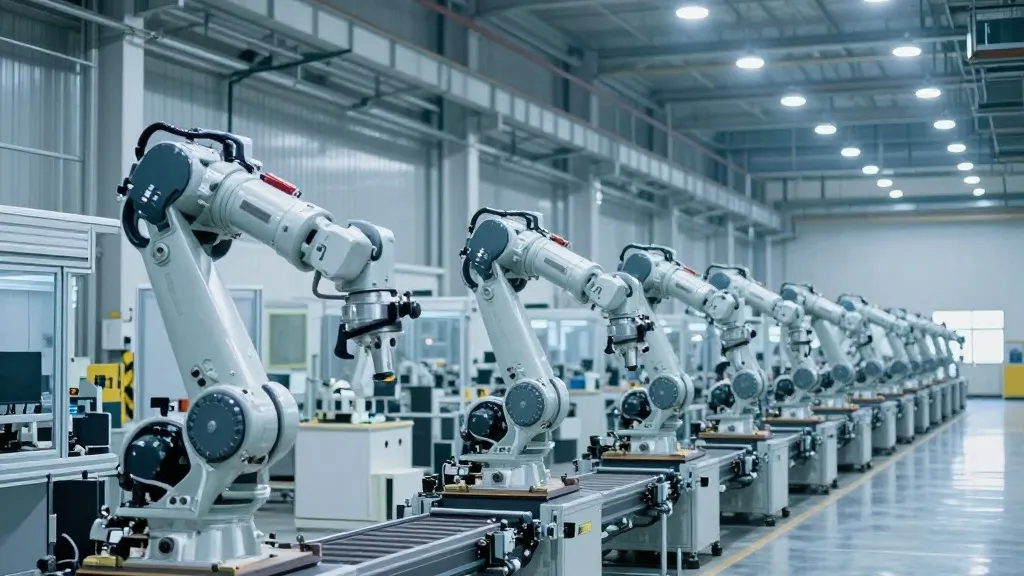
For the first time, Tesla is rolling out humanoid robots that meet the standards of a finished commercial product. This shift marks a move from prototype testing to high-volume manufacturing, signaling that the company believes its robots are ready to handle real-world work. The change is happening now, with production already underway at the Fremont plant in California.
The manufacturing line occupies space previously used for Model S and X vehicles. Tesla cleared that old equipment in just 46 days this spring to make way for a robot line designed to handle one million units annually. According to the company, most of the necessary equipment is already in place. Elon Musk stated on Wednesday’s earnings call that output will ramp up toward approximately 20,000 robots per week as operations scale.
Tesla is addressing a unique challenge in robot training: unlike its cars, which have a massive fleet generating daily data, Optimus does not yet have a large user base. To solve this, the company is creating an "Optimus Academy." In this setup, 10,000 to 20,000 robots will practice various tasks, feeding their learned behaviors back into the AI model. Every unit produced on the Fremont line will contribute to this training dataset, allowing the robots to improve collectively rather than individually.
Hardware upgrades are also in the pipeline. Tesla plans to integrate its AI5 chip into the robots next year. Musk expects the team to finalize refinements in AI, electromechanical design, and reliability by the end of next year. At that point, Tesla intends to begin delivering Optimus units to external companies for jobs that are dangerous, repetitive, or require 24/7 operation. A new video demonstrating AI-driven tasks, rather than scripted movements, is expected within the next one or two months.
The supply chain is preparing for this expansion. In September, Tesla certified Tuopu, Joyson, and Sanhua as mass production partners for key components. Meanwhile, a much larger facility at Giga Texas is under construction. Drone footage shows the steel frame nearing completion, with a long-term target of producing 10 million robots per year. Executives note that current production costs are trending toward the manufacturing cost of the Cybercab, indicating the robots are engineered for high volume from the start.
Despite the progress, significant engineering challenges remain. The robot’s hands are currently the most difficult component to perfect, a point Musk highlighted at a recent event. Much of the current development effort is focused on solving this issue. The company describes the growth trajectory as an S-curve, noting that the initial phase will be a shallow slope before production rates accelerate sharply.
Source: Teslarati