Baghdad Seizes Kurdish Border Posts and Oil Assets Amid Regional Tensions
Iraq's central government is taking control of Kurdistan's key economic assets, a move analysts link to shifting power dynamics between the US and Iran.
By Evelyn Hassan ·
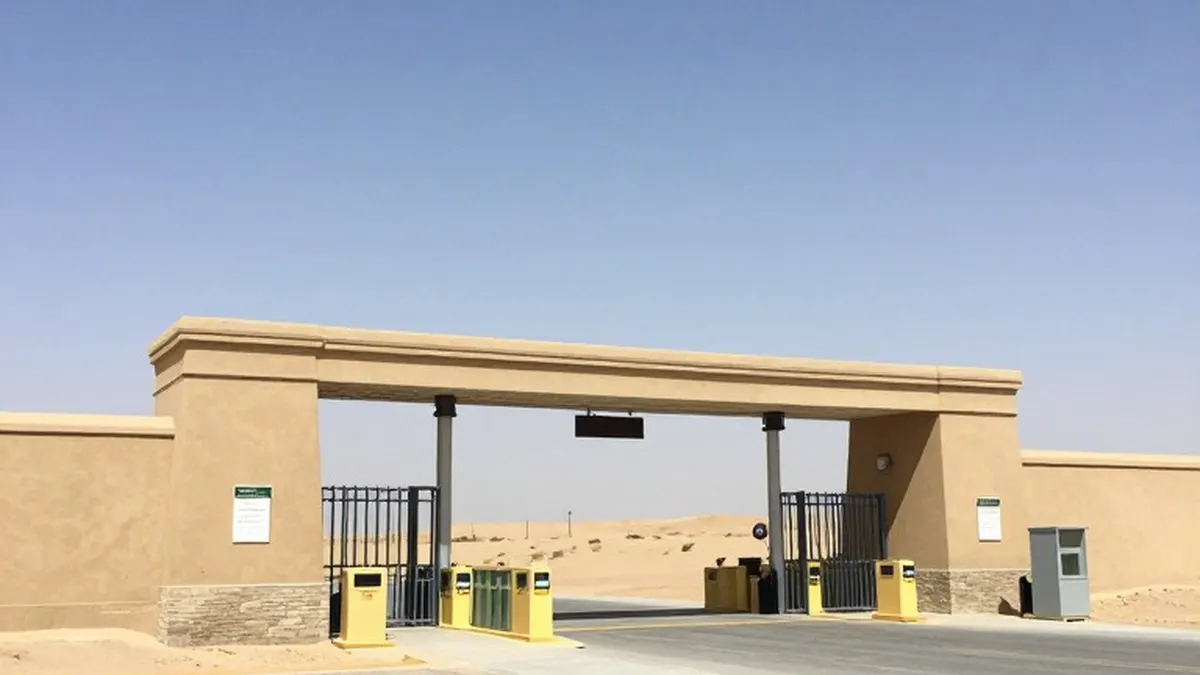
Iraqi Prime Minister Ali al-Zaidi announced that Baghdad will assume control of all border crossings within the Kurdistan Region, along with several oil fields currently under Kurdish security authority. This decisive action has been widely criticized by regional leaders, who view it as a significant reduction of the autonomy guaranteed to the Kurdistan Regional Government (KRG) under the 2005 Iraqi constitution.
The central government's move comes at a critical juncture marked by internal divisions within the KRG and heightened regional tensions as the Middle East prepares for a potential new US and Israeli strike on Iran. Under pressure from Washington, Prime Minister Zaidi recently moved to curb the influence of Kataib Hezbollah, a powerful Shia militia aligned with Tehran. Baghdad officials claim the militia has generated hundreds of millions of dollars through oil smuggling, a finding that has directly informed the new directives.
On Tuesday, Sabah al-Numan, the spokesperson for the Prime Minister, confirmed that Baghdad would take over all border posts in the region. He further stated that Zaidi has directed the federal oil ministry to manage all oil fields located outside the Kurdistan Region's borders but under its security control. These sites are situated in the provinces of Diyala, Kirkuk, Salaheddine, and Nineveh. Additionally, the KRG has been ordered to route all oil exports through the federal oil ministry, ending its independent export capabilities.
The dispute over border crossings and energy resources has long been a point of contention between the federal government and the autonomous region. Baghdad's current push to centralize control aligns with its strategic goal of sealing new energy deals with Turkey. By establishing pipelines through the region, Iraq aims to bypass the Strait of Hormuz, a critical chokepoint for global energy trade.
The timing of the intervention coincides with a major shift in US policy. The last American troops departed Erbil in September, marking the completion of a full US military withdrawal from Iraq. During this year's conflict, the region endured hundreds of Iranian missile and drone strikes. Despite this, the KRG has remained a close security partner to the United States for decades.
Experts are divided on whether Baghdad’s actions were coordinated with Iran or the United States. Iran has previously called on the KRG to rein in Kurdish opposition groups, while the US has lobbied regional states to consolidate federal power. Tom Barrack, the US ambassador to Turkey and Middle East envoy, has been a primary proponent of this centralization view. Yesar Al-Maleki, a Gulf analyst, noted on social media that Washington has clearly shifted its Iraq policy toward greater centralization, giving Baghdad more security bandwidth as the PUK and KDP parties fail to present a united front.
Fabrice Balanche, a Kurdish expert, argues that the move also benefits Iran. He suggests that Baghdad's determination to strip the KRG of its economic resources must be understood within the broader context of the US-Iran conflict. Balanche noted that Tehran fears Iraqi Kurdistan could serve as a rear base for an uprising in Iranian Kurdistan, making the region's weakening a strategic gain for the Islamic Republic.
The KRG is currently in one of its weakest states in recent years, dominated by two family dynasties. The Barzani family in Erbil leads the Kurdistan Democratic Party, while the Talabani family in Sulaymaniyah heads the Patriotic Union of Kurdistan. The PUK recently withdrew from the regional parliament, with leader Bafel Talabani stating that the region is already living under the reality of two governments and two administrations.
Kurdistan Region Prime Minister Masrour Barzani described his government as surprised by the federal decisions, labeling them completely unacceptable. However, both major political parties set aside their differences to issue a joint statement of censure. The statement emphasized that the KRG has never sought more than the rights guaranteed by the Iraqi Constitution and that these rights have been violated over the years.
The joint statement concluded by stressing that all parties must abide by the Constitution. It declared that should any dispute arise between the Kurdistan Region and the Federal Government, the Constitution must serve as the ultimate point of reference for resolution.